Underground Oil Tanks in Tappan, NY: Plan Your Home Sale
September 24, 2026
September 24, 2026
If your Tappan colonial was built somewhere between the Eisenhower and Johnson administrations, there is a decent chance something is buried in the yard that nobody has thought about in decades. For most of the last fifty years, that fact rarely mattered until a home inspector's metal detector found it. As of March 2024, it matters earlier, on paper, before a buyer ever sets foot in the basement.
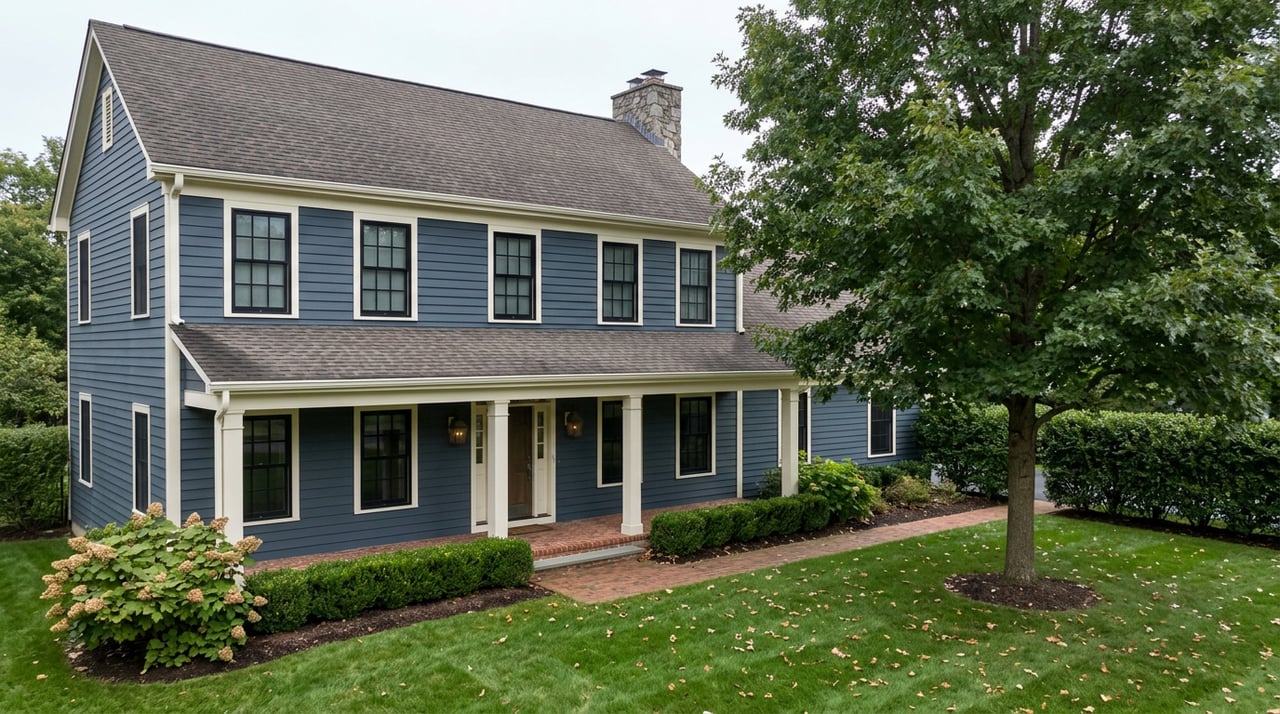
Tappan is an unusual mix. The hamlet's historic core, anchored by the DeWint House built in 1700 and still the oldest standing house in Rockland County, sits blocks away from streets full of ranch and colonial homes thrown up in the postwar building boom. Recent sales tell the story plainly. A colonial on Grand Avenue built in 1957 sold this August after eighteen days on the market. A four-bedroom on Berry Court built in 1968 took seventy-five days to close this spring. Both are the kind of solid, mid-century home that Tappan buyers are actively competing for, and both belong to the exact generation of construction that relied on heating oil before gas conversions became routine.
That generation of homes carries a specific piece of paperwork risk that New York changed the rules on back in March 2024, and it is worth understanding before a Tappan listing goes live.
For years, New York's Property Condition Disclosure Act allowed sellers to provide the buyer a $500 credit at closing instead of completing the state's disclosure form. The form asks questions about the property's condition, including whether a fuel storage tank was on the premises.
According to Staten Island Law, effective March 20, 2024, that $500 credit alternative was eliminated, and completing the state's Property Condition Disclosure Statement is no longer optional for most residential sellers. The form asks directly whether the seller knows of a fuel storage tank on the property, current or former, and whether petroleum products have ever leaked or been released there. A seller who genuinely does not know the answer can check "unknown."
New York remains a state where buyers are expected to do their own homework, and the form is not a guarantee of anything. But the $500 credit alternative no longer exists, so the response to "was there ever an oil tank here" now has to appear in writing rather than first surfacing with a home inspector three weeks into contract.
Roughly eighty-five percent of Tappan's housing stock is single-family homes, and a meaningful share of it dates to the ranch and colonial construction that filled in the hamlet's residential streets after World War II. Heating oil was the default fuel for home heating through much of that era. Plenty of those houses were later converted to natural gas, and plenty of those conversions left the original underground tank exactly where it was, decommissioned informally or simply forgotten once the copper lines were capped.
A rough way to think about what a given Tappan home's construction era suggests about its heating history:
| Era | What it usually means |
|---|---|
| Pre-1900 (the Historic District core near the DeWint House) | Long-converted, often multiple times over, with records that predate any tank tracking |
| 1950s-1960s ranch and colonial boom | The highest likelihood of an original oil tank, converted or abandoned without documentation |
| Post-1990 construction | Typically built with gas or propane from the start, lower likelihood of a legacy tank |
None of this means a mid-century Tappan home is a liability. It means the disclosure conversation is more likely to come up, and it is better handled early than at the inspection table.
Buyers and their attorneys increasingly ask for a tank sweep before closing, particularly on a home old enough to have started its life on oil heat. The process is straightforward and typically covers three things:
If a tank turns up, the conversation shifts to whether it was properly decommissioned, whether there is any documentation of that, and whether a lender will finance the home without further testing. None of this needs to derail a sale. It needs to happen with enough lead time that it does not become a surprise the week before closing.
Here is where Tappan sellers run into a genuine gray area, and it is worth naming honestly rather than smoothing over.
The New York State Department of Environmental Conservation says most home heating oil tanks under 1,100 gallons are not regulated under New York's statewide Petroleum Bulk Storage program. But a handful of counties have been delegated authority to run their own, sometimes stricter, versions of that program locally. The state's own summary page on petroleum tank regulation names Nassau, Suffolk, Westchester, and Cortland as the delegated counties. New York's business licensing portal, in its petroleum bulk storage registration guidance, names four counties too, but lists Nassau, Suffolk, Rockland, and Westchester instead.
Rockland shows up on one official list and not the other. For a Tappan homeowner trying to figure out whether a small residential heating tank falls under any local rule stricter than the state baseline, that inconsistency means the honest answer is to call the Rockland County Department of Health directly rather than assume either web page has the final word. It is a small bureaucratic wrinkle, but it is exactly the kind of detail that surfaces during a real transaction and rarely gets mentioned in general homebuying guides.
The demand side of this story is good news. Tappan's mid-century housing stock is selling briskly. Eighteen days on market for a well-presented 1957 colonial is not a market where buyers are scared off by the town's age or its housing vintage. What slows a deal down is not the existence of an old tank question, it is discovering it unanswered in week three of contract, after a buyer's attorney or lender raises it and everyone scrambles.
The more useful sequence looks like this. Before listing, think through what you actually know about your home's heating history, including anything from a prior owner's disclosure or your own closing paperwork when you bought the house. If a tank sweep would answer a question you cannot answer from memory, get it done before the home goes on the market rather than after an offer is in hand. Fill out the disclosure form honestly rather than treating it as a formality, since that option to opt out no longer exists. And if the sweep does turn something up, treat it as a negotiation point to resolve calmly rather than a reason to panic, because plenty of Tappan homes with exactly this history have closed without issue once the paperwork caught up with reality.
If you are weighing a sale of an older Tappan home, or trying to make sense of what your specific street and vintage suggest about this question, a conversation early is worth more than a surprise late. You can browse current Tappan listings and neighborhood detail here, or get a sense of where your home stands with a home valuation.
Does every older Tappan home need a tank sweep before listing? Not necessarily. If you have documentation that your home was always heated by gas, propane, or a tank that was properly removed with paperwork to prove it, a sweep may not add much. The homes worth checking are the ones where nobody currently living there is quite sure.
What if the tank is above ground instead of buried? An above-ground tank in a basement or utility area is generally viewed as far less risky by buyers and lenders, since it is visible and inspectable rather than hidden underground. It still needs to be disclosed if it exists.
Do buyers ask sellers to remove a tank before selling? In practice, most buyers, their attorneys, and their lenders will ask for one anyway once a tank is found, which is why so many sellers choose to handle it before listing rather than during contract.
Working through a question like this with someone who has walked other Tappan sellers through the same paperwork tends to make the process feel less like a hurdle and more like one more step in a plan. If you would like to talk through what your home's age and history mean for your sale, Let's Connect.
This article is general information, not legal, tax or financial advice. Consult a qualified professional about your situation.
Stay up to date on the latest real estate trends.

A thoughtful, client-focused approach and strong understanding of market positioning shape every real estate experience. Drawing on a background in sales, marketing, and design-driven industries, Catherine helps buyers and sellers navigate important decisions with confidence, clarity, and personalized guidance.

CATHERINE HOTALING
ADDRESS 76 N Broadway Nyack, NY 10960