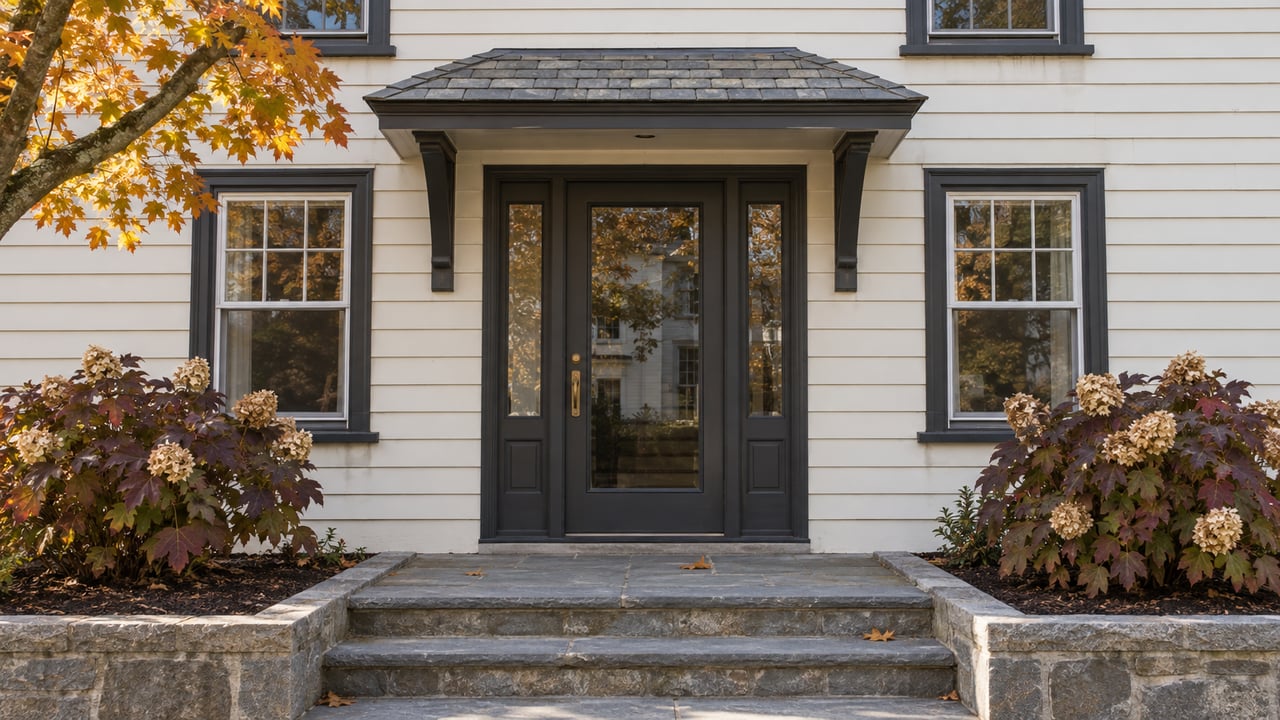
Why Rockland Co-ops Take Longer to Close, and What Rockland County's 45-Day Board Rule Changes for Nyack Buyers
October 22, 2026
October 22, 2026
Co-ops are the one kind of home in Rockland County where buyers still have room to negotiate. In the third quarter of 2026, co-ops sold for 96.5% of their original list price after a median of 71 days on market. Single-family homes sold for 99.9% of original list in 40 days. That gap of about three and a half points and a month on market has a cause you can trace. A co-op purchase has to pass two separate approvals, one from a board and one from a lender. Rockland County has already put the board's approval on a fixed clock. The lender's review has no such clock, and neither does the stretch of time before an application counts as complete. That is where most of a co-op's extra time goes.
This matters most in Nyack. The village's riverfront co-ops include buildings like Rivercrest Co-op Apartments, a six-story, 95-unit cooperative at the end of Gedney Street. For many buyers looking at Nyack, a co-op is the most affordable way into a walkable river village. That makes the approval process part of the price.
The OneKey MLS Q3 2026 report for Rockland County, with data current as of October 7, 2026, puts the three main ownership types side by side:
| Q3 2026, Rockland County | Single-family | Condo | Co-op |
|---|---|---|---|
| Median sale price | $800,000 | $516,500 | $152,500 |
| Median days on market | 40 | 42 | 71 |
| % of original list price received | 99.9% | 99.0% | 96.5% |
| Months of supply | 3.6 | 3.7 | 5.2 |
| Closed sales | 508 | 147 | 21 |
Condo inventory rose much faster than co-op inventory over the past year. Condo inventory was up 48.7% year over year at the end of Q3 2026, to 177 homes for sale. Co-op inventory was down 18.9%, to 30. Even so, condos still close within a point of list price and co-ops do not. Co-op closed sales actually rose 23.5% in the quarter, from 17 to 21. So co-ops are not short of buyers. The headline median price is less useful than it looks. On 21 sales, the Q3 co-op median fell 28.4% from $213,000, but the median pending price rose 30.9% to $179,999. With so few sales, the mix of buildings that happened to close can swing the median either way. The discount is the steadier signal. For year-to-date 2026, co-ops received 96.1% of original list.
Many buyers expect co-op boards to work the way they hear Manhattan boards do, with long silences and no explanation for a decision. Rockland County has had different rules since 2018, and they were tightened in 2022. The Rockland County Bar Association's September 2022 Newsbrief summarizes the county's Timely Co-op Application Decision Law. The law was adopted on February 6, 2018, and amended by Local Law No. 4 of 2022, which County Executive Ed Day signed on March 3, 2022, and which took effect June 10, 2022.
As the bar association describes it, the sequence works like this:
The clock starts with a fully completed application, not with the date the buyer first hands in a package. The 10-day deficiency notice is how the county keeps an incomplete file from sitting unread. Each round of corrections, though, pushes back the day the 45 days begin. Of the time a co-op deal adds, the part buyers control most is how complete the application is the first time.
The law also says rejections cannot rest on discrimination as defined in the Rockland County Fair Housing Law. Anyone who believes they were harmed may file a claim with the Rockland County Commission on Human Rights.
The 2022 amendment did more than set deadlines. Co-op applications in Rockland must disclose all application timelines and any minimum financial qualifications. If a co-op has no mandatory standards, it must still give prospective buyers its preferred minimum income, total assets, credit score, debt-to-income ratio, and percentage of the purchase price that can be financed. The board keeps discretion over how it weighs those factors.
That changes the work on both sides. A buyer can compare their own finances with a building's stated thresholds before writing an offer. They don't have to find out partway through a contract. A seller's buyer pool is shaped by the building's stated financing percentage and income preferences as much as by the asking price. When a co-op sits at 96% of list for months, the building's disclosed standards may explain more about who can actually close than the asking price does. Sellers working out where to set a co-op price can start with a home valuation that accounts for the building's requirements along with recent comparable sales. Our earlier piece on positioning a Nyack home for today's buyers covers the presentation side.
County law covers the board. It does not cover the bank. A buyer who finances a co-op purchase takes out a share loan, and that loan depends on the building as much as on the buyer.
Under the Fannie Mae Selling Guide's co-op project eligibility section, Fannie Mae buys co-op share loans only from lenders it has specially approved, and those lenders must decide whether the project itself is acceptable. Fannie Mae also says that limited and inconsistently reported data on co-op projects can get in the way of financing. The building has to pass its own review. That review looks at the cooperative's finances and at owner payment history, including a requirement that no more than 15% of owners be more than 60 days delinquent on obligations such as assessments.
The share loan eligibility section adds more limits:
Co-op financing is available in Rockland. Citizens, for example, advertises fixed- and adjustable-rate co-op loans in the county, including financing for second homes and non-warrantable co-ops. But each lender's review of the building happens at the same time as the board's review, on the lender's own schedule. A building whose financial records are hard to pull together slows down every buyer who applies there. That fits the market data. A process with two approvals, only one of them on a deadline, adds about a month to the median and gives buyers leverage to match.
Two state bills would affect co-op purchases in Rockland. Neither has become law.
S1452, the proposed Fairness in Cooperative Homeownership Act, would require standardized applications and requirements, acknowledgment and completeness procedures, a decision within 45 days with an optional 14-day board extension, and reasons for denial. It advanced to third reading on May 21, 2026, and was committed to the Senate Rules Committee on June 5, 2026. Its Assembly companion, A4507, remains in the Assembly Housing Committee. The county law addresses this possibility directly. It says Rockland's co-op article becomes null and void if state or federal legislation with the same or substantially the same provisions takes effect. If S1452 were enacted and took effect, its rules would replace the county's, with a slightly different timeline that includes the board extension.
S7541 would require co-op and condo boards or their management companies to give prospective buyers the latest inspection and engineering reports and permits. It passed the Senate on June 11, 2025, died in the Assembly in January 2026, and was committed to the Senate Rules Committee on June 5, 2026. Under current law, buyers and their attorneys still have to request a building's physical-condition records.
The county law described here applies to cooperative housing applications. Condos are a different form of ownership. Our post on condos, townhomes, and cottages in Piermont covers that part of the river-village market.
Fannie Mae's share-loan rules allow principal residences and second homes and do not allow investment properties. Each building also sets its own sublet rules.
Rockland had only 21 co-op closings in Q3 2026. At that volume, a few sales in larger or smaller buildings can move the median by tens of thousands of dollars from one quarter to the next. Days on market and the share of list price received are steadier measures.
This post is general information, not legal or financial advice. Please confirm how any law, loan program, or building requirement applies to you with an attorney or lender.
If you're weighing a Nyack co-op, whether you're buying or getting ready to list, Catherine Hotaling can go through a building's disclosed standards and the approval timeline with you before an offer goes in. Let's Connect.
Stay up to date on the latest real estate trends.
A thoughtful, client-focused approach and strong understanding of market positioning shape every real estate experience. Drawing on a background in sales, marketing, and design-driven industries, Catherine helps buyers and sellers navigate important decisions with confidence, clarity, and personalized guidance.

CATHERINE HOTALING
ADDRESS 76 N Broadway Nyack, NY 10960